
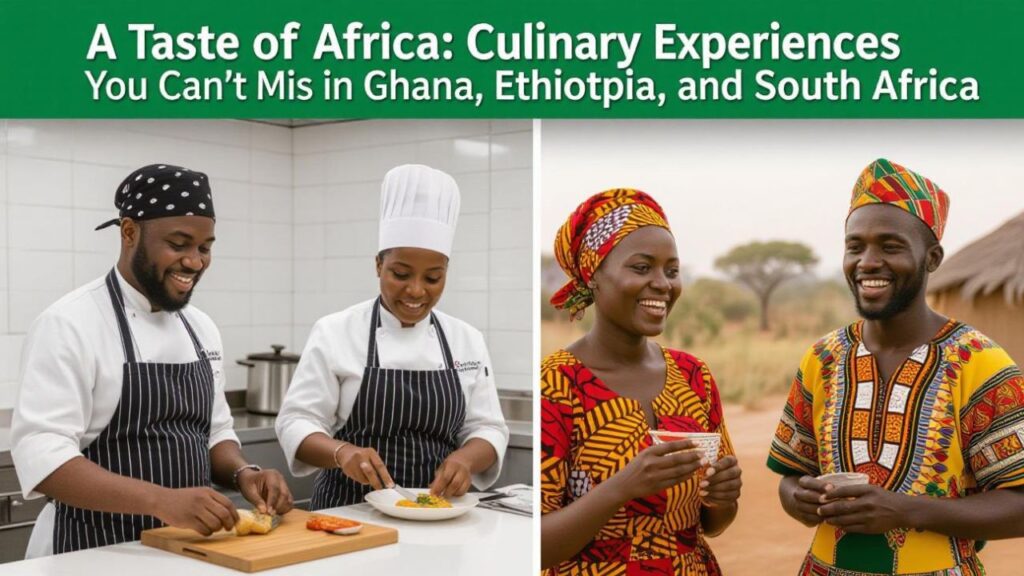
Culinary Experiences – A Taste of Africa is incomplete without diving into the rich and diverse culinary traditions of Ghana, Ethiopia, and South Africa. Each country offers unique flavors, cooking styles, and cultural practices that make their food more than just sustenance—it is an identity, a story, and an experience. From Ghana’s hearty jollof rice to Ethiopia’s communal injera feasts and South Africa’s iconic braai gatherings, every bite is a reflection of history and community. Travelers visiting Africa are often amazed by how food becomes a central part of hospitality and cultural connection. At http://letstravelafrica.co.za/, we emphasize not only the taste but also the meaning behind these culinary experiences. Exploring African food is about savoring spices, textures, and aromas while learning the traditions passed down through generations. For those seeking an authentic journey, immersing yourself in these vibrant food cultures is an unmissable highlight that leaves lasting memories and a true sense of Africa’s heart.

Ghana’s Flavorful Heritage: Jollof, Waakye, and More
Ghanaian cuisine is one of the most celebrated in West Africa, with dishes that balance spice, richness, and texture. A must-try is the famous jollof rice, a tomato-based dish often served with chicken, goat, or fish. Each family has its secret recipe, making the experience unique every time. Another staple is waakye, a nutritious blend of rice and beans, often accompanied by fried plantains, spaghetti, and boiled eggs. Street food in Ghana is vibrant, with grilled tilapia, kelewele (spicy fried plantains), and fufu with soup being local favorites. Ghanaian meals are not only about taste but about togetherness, often shared with family and visitors. The bustling markets in Accra or Kumasi offer travelers a chance to experience food culture up close, where the colors, aromas, and sounds create a sensory adventure that captures Ghana’s warmth and hospitality.
 Why You Should Visit Malawi, Rwanda, and Lesotho — Africa’s Most Overlooked Travel Destinations
Ethiopia’s Unique Coffee and Injera Culture
Ethiopian cuisine is inseparable from its cultural identity, with injera being its cornerstone. This spongy, sour flatbread, made from teff flour, is served with a variety of stews called wot, including lentils, vegetables, or meat seasoned with the famous berbere spice mix. Eating in Ethiopia is a communal affair—diners share from one large platter, using their hands to scoop food with injera. Equally iconic is the traditional Ethiopian coffee ceremony, a ritual that can last hours, where coffee beans are roasted, ground, and brewed in front of guests. It represents respect, hospitality, and community. For travelers, participating in a coffee ceremony is an unforgettable experience that goes beyond taste—it connects you with Ethiopia’s history and daily life. The balance of spice, tradition, and ritual in Ethiopian cuisine makes it not just food but an immersive cultural expression that every visitor should experience.
 Explore Africa Beyond the Tourist Trail: Underrated Places That Offer Once-in-a-Lifetime Experiences
South Africa’s Braai Tradition and Rainbow Cuisine
South Africa is known as the “Rainbow Nation,” and its food truly reflects this diversity. The braai, or barbecue, is one of the country’s most cherished traditions. It is more than grilling meat—it is a social event where families and friends gather, share stories, and enjoy each other’s company. Popular meats include boerewors (farmers’ sausage), lamb chops, and chicken, often paired with side dishes like pap (maize porridge) and chakalaka (spicy vegetable relish). South Africa’s culinary scene is also shaped by influences from Dutch, Indian, and Malay traditions, resulting in unique dishes such as bobotie, bunny chow, and Cape Malay curry. Exploring local markets in Cape Town or Johannesburg allows travelers to taste the fusion of cultures in every bite. The braai experience embodies South Africa’s spirit of unity and celebration, making it an essential part of any culinary journey across the continent.

Why Food Tourism in Africa Matters
Food tourism in Africa goes beyond satisfying hunger; it provides travelers with deeper cultural insights and lasting memories. Experiencing Ghana’s street food markets, Ethiopia’s coffee rituals, or South Africa’s braai gatherings creates opportunities for authentic human connection. According to UNWTO, gastronomy tourism is one of the fastest-growing sectors, as travelers increasingly seek cultural immersion through food. By exploring Africa’s culinary experiences, visitors not only enjoy flavors but also contribute to local economies, support small food businesses, and preserve traditions passed down through generations. At http://letstravelafrica.co.za/, we encourage travelers to go beyond sightseeing—tasting local cuisine is a journey in itself. Whether it’s the smoky aroma of grilled fish in Accra, the comforting spice of Ethiopian wot, or the vibrant flavors of a South African braai, food allows you to connect with people and places on a much deeper level, turning travel into a full-sensory adventure.
